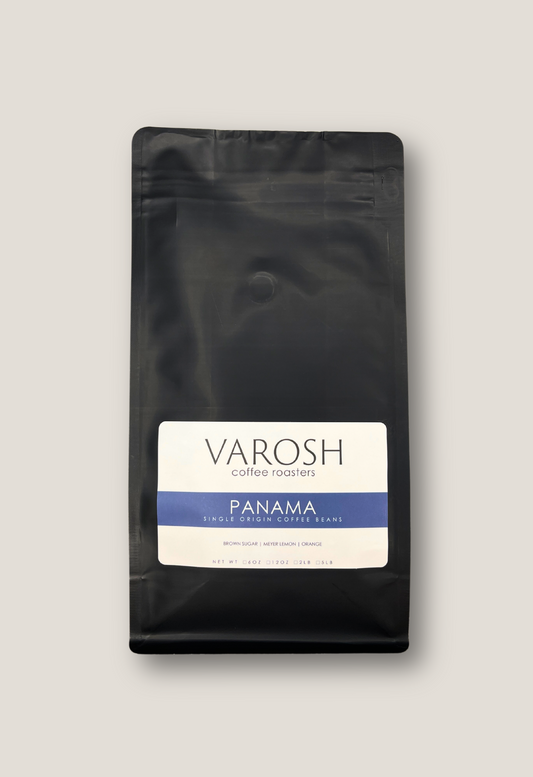

If you've ever had to ask "wait - is there mold in my coffee?", you are absolutely not alone. It's one of the most common questions we get from customers who've stopped by VAROSH Coffee Roastery. Over the last decade, there are misconceptions about coffee claiming "90% of coffee is contaminated" or that unless a bag has a mold-free label, it's not great quality coffee. This isn't the full story.
We've decided to educate the Charlotte community and those reader online about the reality of specialty coffee. In this blog, let's walk through what mycotoxins actually are, what the actual peer-reviewed research says, and why a roastery like ours doesn't need a marketing gimmick to make sure your coffee is clean. We're going to cite our sources the whole way from journals, regulatory agencies, and the Specialty Coffee Association itself so, you don't have to fear what is in your next cup.

What Coffee Roasters Want you to Know about Mold in Coffee?
Yes, small amounts of mycotoxins can technically occur in raw coffee, just like they can in wine, beer, raisins, chocolate, and peanut butter. But specialty-grade coffee is graded specifically to remove fungus-damaged beans, and the roasting process destroys the majority of whatever trace amounts might remain.
Here's the thing about a lot of "mold-free" marketing: it's selling you fear. It convinces you to pay more for something that good specialty coffee was already handling before the beans even left the farm. Even so, through roasting, the heat effectively kills the molds that produces the mycotoxins.
What are Myotoxins? What People Actually Mean by "Mold in Coffee"
Mycotoxins are toxic chemical byproducts naturally produced by certain types of fungi (molds). Mycotoxins in coffee form under bad conditions: high moisture, improper packaging and storage, and poor drying. None of which occurs during specialty coffee production.
They are not the normal conditions of a specialty supply chain, where moisture-controlled drying, careful processing, and (for coffee like ours) hermetically sealed transport are the standard.
In coffee, the two mycotoxins that show up in research are:
- Ochratoxin A (OTA): produced mainly by Aspergillus and Penicillium fungi. It's the mycotoxin most associated with coffee specifically.
- Aflatoxin B1: produced by Aspergillus flavus and related species, more commonly associated with grains, nuts, and decaffeinated coffee.
Both are real, both have been studied. The IARC (International Agency for Research on Cancer) puts aflatoxin B1 in its top carcinogen category, and OTA in the "possibly carcinogenic" category, mostly based on animal studies. (IARC Monographs review, Ostry et al., 2017).
However, here is the important context to know: Just because something can cause harm at some dose doesn't mean the tiny amount in your cup matters. The levels found in coffee are way below safety thresholds set by regulators, and your liver actually breaks down low-level mycotoxin.

Where the "Mold-Free Coffee" Panic Came From
We're in a health conscious era now, and some coffee brands have leaned hard into mycotoxin fear to sell you on the idea that your regular bag is secretly hurting you unless you switch to theirs.
If you want to see this critiqued in detail, including actual side-by-side lab results across a range of mainstream and "mold-free"-branded coffees (spoiler: they all came back clean), Coffee Bros published an excellent breakdown with their own third-party lab testing here. Independent specialty roasters across the industry have been reaching the same conclusion: a single lab certificate from a single batch isn't proof of anything ongoing. And honestly, it's not economically realistic for every roaster to test every single bag that comes through.
The Specialty Grading System Already Filters This Out
This is the part most "mold-free" marketing conveniently skips: green coffee is professionally graded before a roaster like us ever buys it, and that grading process is specifically designed to catch fungus damage.
As an SCA member, we buy against the same standard the whole specialty industry runs on. Under the SCA's Green Arabica Coffee Defect system, someone literally inspects a 350-gram sample bean by bean. One single fungus-damaged bean counts as a Category 1 defect, same severity as a full black or full sour bean, and that alone disqualifies the lot from being called specialty grade. This defect cannot be sold as specialty grade (SCA Green Coffee Defect Handbook).
In other words: the exact defect everyone's worried about is the defect that disqualifies a coffee from being called "specialty" in the first place. Mold is a graded-out defect that keeps bad coffee out of the specialty pipeline before a roaster ever sees the bag.
Roasting Kills Off Traces of Mold
Roasting is effective at destroying mycotoxins. You'll find it as one of the most consistently replicated findings in coffee food-safety research, spanning two decades of peer-reviewed studies:
| Study | Reported OTA Reduction from Roasting |
|---|---|
| van der Stegen et al., J. Agric. Food Chem., 2001 | Roast & ground coffee retained only ~16% of original OTA (~84% reduction); soluble coffee dropped further to ~13% |
| Ferraz et al., Food Control, 2010 | Up to 98% reduction at higher roasting temperatures |
| Bonnet et al. / J. Agric. Food Chem., 2004 | >90% reduction under typical espresso-roast conditions |
| ScienceDirect, 2013 (roast level & particle size study) | 56% to 97% reduction depending on roast/grind |
| Heintz et al., Journal of Food Science, 2021 (literature review) | Generally 70–90%+, with the Codex Alimentarius/International Coffee Organization citing a 65–100% range depending on process |
Read the primary research yourself: Heintz et al., Journal of Food Science (2021), van der Stegen et al., J. Agric. Food Chem. (2001), and the 2024 review in Toxins on OTA reduction in coffee.

So why do some brands charge 3-5x more for "mold-free" coffee?
Here are a few reasons:
- Fear sells. Telling someone their current coffee might be hurting them is a great hook, especially if they're already worried about their health.
- One certificate goes a long way. Testing every single lot at real production scale is expensive which is exactly why most "tested" claims are based on occasional spot-checks, not constant testing.
- It plays off something real. Mycotoxins genuinely do show up but mostly in low-grade, badly processed coffee that wouldn't pass specialty grading anyway. Pointing at that and implying it applies to every bag is misleading.
At VAROSH Coffee Roasters, we sell our coffee beans with transparency, safety, and trust. We want you to educate you on specialty coffee, so you can make the best informed decisions that is right for you.
How we actually produce your coffee
We're a small-batch roastery in the Charlotte, NC area, and an SCA member, which means the grading standards above aren't just theory for us. They're what we buy against on every origin, whether it's Panama, Ethiopia, or Peru.
- We buy specialty-grade green coffee, so the fungus-damaged-bean problem is already filtered out before it's ever shipped to us.
- We roast in small batches, so coffee isn't sitting around in a warehouse for months.
- We roast to order, not to sit on a shelf, so the roasting that kills off mycotoxins happens right before your bag ships, not months ahead of time.
That's really it. No fear-based upsell, no surcharge on coffee beans. Just doing things right, which happens to also mean doing things safely. We just hope you get the most out of a coffee experience.

Myth vs. Reality: The Quick Recap
| The Myth | The Science |
|---|---|
| "90%+ of coffee is moldy" | Fungus-damaged beans are a disqualifying Category 1 defect in specialty grading. These coffee beans are screened out, not common in graded lots. |
| "Roasting doesn't destroy mycotoxins" | Multiple peer-reviewed studies show 56–98% reduction in ochratoxin A from roasting alone. |
| "You need a special 'mold-free' brand to be safe" | Independent lab testing has found mainstream and specialty coffee alike testing non-detectable for major mycotoxins. |
| "Mycotoxins in coffee will make you sick" | Regulated trace levels sit at a small fraction (often single-digit percent) of established safety thresholds. |

Frequently Asked Questions
Is there mold in coffee? Trace amounts can occur in raw coffee, but specialty grading screens out fungus-damaged beans, and roasting kills off most of what's left. A properly sourced, fresh-roasted bag isn't a real mold risk.
Are mycotoxins in coffee dangerous? At the levels found in graded, roasted specialty coffee, the answer is no. We're talking a small fraction of recognized safety limits.
Does roasting actually kill mold? Yes. It kills live mold outright and breaks down most of any leftover mycotoxin. Studies show anywhere from 56% to over 98% reduction depending on roast level.
Conclusion
The grading systems and roasting processes that built the specialty coffee industry were already designed to deal with exactly this issue, decades before "mold-free" became a marketing gimmick. You don't need to pay a premium for a fear you don't have to have.
What you do deserve is fresh, honestly sourced coffee from people who'll tell you straight how it's made when you ask. That's the only kind we roast.
Shop our current small-batch roasts →
Read more about our story →
Stop by the Indian Trail roastery →
Sources & Further Reading
- Healthline – "Mycotoxins Myth: The Truth About Mold in Coffee" (evidence-based review)
- IARC – Mycotoxins as Human Carcinogens: IARC Monographs Classification (Ostry et al., 2017)
- European Commission – Regulation (EU) 2022/1370 on Ochratoxin A Maximum Levels
- European Food Safety Authority – Ochratoxin A Scientific Opinion
- Heintz et al. – "Assessing the Food Safety Risk of Ochratoxin A in Coffee," Journal of Food Science (2021)
- van der Stegen et al. – "Effect of Roasting Conditions on Reduction of Ochratoxin A in Coffee," J. Agric. Food Chem. (2001)
- "Reduction in Ochratoxin A Occurrence in Coffee: From Good Practices to Biocontrol Agents," Toxins (2024)
- "Determination of Potentially Mycotoxigenic Fungi in Coffee," PubMed Central
- Specialty Coffee Association – Green Coffee Defect Handbook & Grading Standards
- Coffee Bros. – Independent Lab Testing of Mold & Mycotoxins Across Popular Coffee Brands
- Artizan Coffee Roasters – On the Economics and Ethics of "Mycotoxin-Free" Marketing Claims