

Coffee Terminology: The Complete Coffee Roasting Glossary
From the Roastery - Coffee Education Series
You've picked up a bag of our coffee, read the tasting notes: "bright acidity, caramel sweetness, fruit finish", and wondered: how does a a coffee bean taste like that? The answer lives entirely inside the roast. We'll go over top coffee terminology associated with coffee roasting.
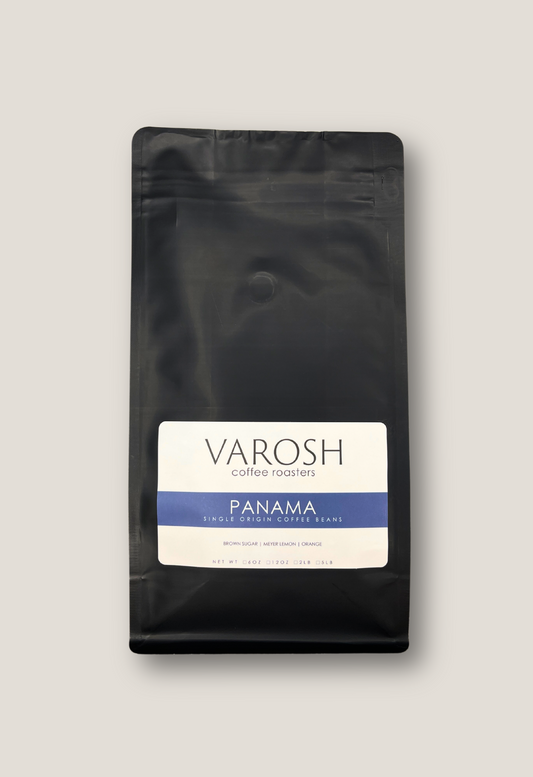
At VAROSH Coffee Roasters, every batch we roast is logged, tasted, and evaluated against the specific flavor potential of that bean and every decision we make in the drum, from how fast we raise the temperature to exactly when we drop the roast, shapes what ends up in your cup.
But here's the thing: the more you understand about what roasting actually does to a coffee bean, the more rewarding every cup becomes. This glossary covers meaningful roasting terms to help you understand the coffee roasting business.
Coffee Roasting Terminology: Terms You Need to Know
Acidity
That bright, zingy quality that makes a great cup feel alive. Not sharp or unpleasant, but vibrant. Think lemon, green apple, or a squeeze of grapefruit. In specialty roasting, acidity is something we work to preserve, not eliminate. It's a marker of quality, not a flaw.
Alkaloid
Any group of organic, nitrogenous compounds that are physiologically active. Caffeine being the most famous. Alkaloids are responsible for that characteristic bitterness.
Arabica
Coffee arabica is the dominant species in specialty coffee. Grown at high altitudes, low caffeine than Robusta, and capable of extraordinary flavor nuance.

Aroma
The smell of brewed coffee. A complex and telling quality indicator. Evaluated as a dry fragrance (ground coffee pre-brew) and wet aroma (after hot water contact).
Astringency
A dry or puckering mouthfeel that coats the mouth after ingestion. A well-roasted, well-sourced coffee should never leave you feeling parched.
Baked
A roast defect that reduces the coffee's sweetness, creating a flat, papery, cardboard-like taste. Baking happens when the roast temperature stalls or rises too slowly, robbing the bean of the energy it needs to develop properly.
Bean Temperature (BT)
The temperature reading from a bean probe, tracking how quickly the bean mass is absorbing and radiating heat throughout the roast. Plotted over time, BT forms the core of any roast profile curve.
Bitter
A sharp, pungent taste, perceived at the back of the palette. Bitterness is the most misunderstood flavor in coffee. Some of it is completely natural and desirable, especially in dark roasts and espresso. The problem is when bitterness dominates and crowds out sweetness, body, and complexity.
Body
The weight of coffee in your mouth: how full, thick, or substantial it feels.

Boulders
The oversized particles that end up in your grind when the grinder isn't dialed in or when beans are particularly hard and dense. Boulders under-extract, pulling out less flavor than the surrounding grounds. It's a reminder that grind consistency matters as much as the roast itself.
Caramelization
A complex series of sugar-browning reactions. Sugars begin to break down and transform into the caramel, butterscotch, and brown sugar notes we associate with medium roasts.
Carbonization
The formation of carbon from an organic substance. What happens when roasting goes too far. Organic matter stops transforming and starts turning to carbon.
Chaff
The papery silver skin that clings to the outside of the coffee bean and releases during roasting as the bean expands.
Charge
The moment we load green coffee into the hot drum to begin a roast.
Charge Temperature
The air temperature in an empty roasting machine. Too high and beans absorb heat too aggressively in the early stages, risking scorching. Too low and the roast starts sluggishly, making it harder to hit your targets later
Cherry
The fruit of the coffee plant. Each cherry contains two seeds, which are the coffee beans. Cherries pass through green, yellow, orange, and red as they ripen; some varieties turn yellow when ripe.

Cinnamon Roast
The lightest roast possible, dropped right as first crack begins. The coffee bean is pale, almost tan, with a sharp acidity and almost no sweetness or roast development.
City Roast
A clean, bright light roast pulled during or just after first crack.
Coffee Roasting Machine
A roasting machine is a precision instrument for applying, controlling, and adjusting heat to transform green coffee into something extraordinary. Our drum roaster gives us real-time control over temperature, airflow, and timing so every batch gets exactly the attention it deserves.
Conduction
Heat transfer through direct contact, beans touching the drum surface, beans touching each other. In a drum roaster, conduction plays a major role in early-roast heat transfer. It's why drum speed matters: more contact time with the drum surface means more conductive heat.
Continuous Roaster
An industrial-scale roaster designed for volume, not craft. Beans flow through in a constant stream. Position in the machine, not time, determines how much they roast. It's the opposite of what we do at VAROSH. Our small-batch approach means we're with every roast from start to finish.
Convection
Heat transfer through moving hot air. In drum roasting, convection works alongside conduction to heat the beans. Hot air fills the drum and surrounds each bean, transferring energy continuously.
Creosote
The dark, oily residue that builds up in a roaster's exhaust system over time. It's a byproduct of roasting smoke and compounds condensing in cooler ductwork.
Cup Profile
A descriptor summary of a coffee's tasting notes, body, acidity, sweetness, and finish. Used on bags and menus to communicate what a coffee tastes like before you brew it.

Cupping
A systematic way we taste and evaluate every coffee before it ever reaches you.
Dark Roast
Coffee roasted past second crack, producing oily beans with reduced acidity, heavy body, and roast-dominant favors like dark chocolate, tobacco, and smoke. Origin characteristics are largely replaced by roast character.
Degassing
The release of CO2 from roasted coffee beans after roasting. Fresh-roasted coffee releases significant CO2 for days after roasting, which is why resting coffee before brewing improves extraction.
Desorb
The technical term for when a substance releases from a surface. In roasting, this describes the moment compounds trapped inside the bean begin to escape as gas or vapor.
Developed Time
The portion of the roast after first crack, breaking down the roasted coffee bean's cellulose structure.
Drop
To discharge beans from a coffee-roasting machine.

Drum Roaster
The moment we end the roast by releasing beans from the drum into the cooling tray.
Endothermic
In the early stages of roasting, the bean is absorbing more heat than it's releasing, it's endothermic. A reaction requiring absorption of heat energy.
Endothermic Flash
A brief, fascinating phenomenon during first crack where water vapor escaping from inside the bean causes a sudden surface temperature drop even while the roast is gaining heat overall.
Exothermic
As first crack begins, the bean transitions from absorbing heat to releasing it, it becomes exothermic.
Facing
A surface-level scorching that occurs late in dark roasts when bean surfaces are exposed to direct heat too long.
Fermentation
A stage in wet and anaerobic coffee processing where naturally occurring microorganisms break down the mucilage surrounding the bean. Duration, temperature, and microorganism populations all influence flavor.
Fines
The ultra-fine coffee particles produced by any grinder. Fines extract faster than coarser particles and can contribute bitterness if excessive.
First Crack
An audible popping sound that occurs during roasting as the bean's cell structure expands and water vapor escapes. Marks the beginning of 'light roast' territory. An important roasting milestone.

Flavor
The complete sensory experience of drinking coffee that includes the combination of taste on the tongue and aroma through the nose.
French Roast
A dark, bittersweet roast pushed to the point where oils visibly bleed to the bean's surface and second crack has fully finished.
Full City Roast
A medium roast dropped right at the threshold of second crack.
GrainPro
A hermetically sealed inner liner used in coffee bags to protect green beans from moisture, humidity, and pests during shipping. Significantly extends shelf life and preserves cup quality.
Green Coffee
Raw, unroasted coffee beans. Quality can be preserved for months to years if stored properly.

Heat Sink
Any material that absorbs heat from its surroundings. In roasting, the bean mass itself acts as a heat sink in the early roast stages drawing energy from the drum and the surrounding air.
Hermetic
Completely airtight. Hermetic packaging for roasted coffee prevents oxygen from degrading the beans after roasting.
Italian Roast
The darkest commercial roast, which produces bitter and acrid coffee. Origin character is entirely absent.
Kettlebell Roast
Informal terms for a roast between medium and dark. Sometimes called medium-dark or Full City+. Retains some origin complexity while adding more roast-driven sweetness and body.
Light Roast
Coffee roasted to just before or at first crack, typically producing cinnamon to light brown beans. Retains the most origin character, including bright acidity, delicate floral or fruit notes, lighter body.
Maillard Reactions
The single most important set of chemical reactions in coffee roasting. Amino acids and reducing sugars react to produce hundreds of new flavor compounds the nutty, caramel, roasty, and complex notes that define roasted coffee
Medium Roast
Coffee roasted between first and second crack. Balances origin character with roast-developed sweetness and body. Produces caramel, nutty, and chocolatey notes. Highly versatile across brew methods.

Moisture Content
The percentage of water inside a green coffee bean before it hits the drum.
Mouthfeel
The physical sensation of coffee in your mouth: not just taste, but texture. Is it thin and tea-like? Creamy and round? Drying and rough? Mouthfeel is shaped by oils, proteins, and fine particles in the cup, and it's influenced by roast level, processing method, and how the coffee was brewed.
Nordic Roast
A very light roast style popularized by Scandinavian specialty roasters. Emphasizes maximum origin expression, often acidic, delicate, and tea-like. Requires exceptional green coffee to taste good.
Organic Acid
Carbon-containing compounds with acidic properties, and coffee contains a remarkable variety of them: chlorogenic acids, citric, malic, tartaric, acetic, and more. These acids are what create the brightness and vibrancy we love in well-roasted specialty coffee.
Pungent
A sharp, penetrating flavor or aroma quality. In coffee, often associated with dark roasts and their smoky, spicy, or tar-like edge.
Pyrolysis
The chemical decomposition of organic matter under intense heat.

Radiant
Heat transferred not by contact or air movement, but by electromagnetic radiation. The drum walls radiates heat directly into the bean mass without touching it.
Rate of Rise (ROR)
How fast the bean temperature is climbing measured in degrees per minute.
Respiration
Green coffee is alive and like any living seed, it breathes, exchanging gases with its environment.
Rest (Post-Roast)
The period after roasting during which coffee degasses and flavor stabilizes. Most roasters recommend resting filter coffee 5-14 days post-roast, and espresso 10-21 days, for best extraction.
Retronasal Olfaction
The way we smell coffee from inside our mouths. Aromas travel up the back of the throat and into the nasal cavity as we swallow. Much of what we experience as flavor in a cup of coffee is actually retronasal aroma, not taste on the tongue.
Roast Date
The date on which coffee was roasted. Fresh roasted coffee is typically at peak flavor 5-20 days post-roast depending on method. Prioritize a known roast date over best by date.
Roast Development
The transformation of flavor compounds during roasting, creating the flavors, aromas, body, and acidity we experience in the cup.
Roast Profile
A logged record of a roast's time and temperature curve. Roasters use profiling software to repeat successful roasts and intentionally modify flavor outcomes. It's considered as a recipe for the roaster.

Roast Ratio
The percentage of weight lost during roasting. Green coffee contains moisture that evaporates.
Robusta
Coffea Canephora- the second-most-planed coffee species. Higher caffeine than arabica coffee. Used primarily in commercial blends, instant coffee, and some Italian espresso blends.
Scorching
Surface burning that happens in the early stages of a roast when beans make prolonged direct contact with an overheated drum.
Second Crack
A second, faster series of pops during roasting as the bean's cell walls fracture more deeply. Occurs during the dark roast phase. Produces oily beans and smoky, roasty flavors.
Shrinkage
The physical reduction in size of coffee beans during roasting as moisture evaporates and CO2 is released.
Single Origin
Coffee traceable to one specific country, region, farm, or cooperative. Celebrates the unique flavor characteristics of a specific place and harvest, as opposed to blended coffees.
Soluble Chemistry
The compounds in roasted coffee that actually dissolve into your brew water: acids, sugars, oils, and aromatic molecules. Not everything in a roasted bean is soluble; the roaster's job is to develop as much desirable soluble chemistry as possible while minimizing the undesirable compounds that lead to bitterness or flatness.
Small-Batch Roasting
Roasting coffee in quantities small enough to allow precise manual control over the roast curve. Enables greater attention to each bean's unique characteristics.

Specialty Coffee
Coffee that scores 80+ on the SCA scale, is sourced with transparency and quality focus, and is handled with care from farm to cup. Uses higher-quality arabica coffee beans.
Taste
The component of flavor that lives on the tongue like sweet, sour, salty, and bitter.
Temperature Gradient
The difference in temperature between the bean's core and its surface. During roasting, the inside of the bean is always cooler than its surface. The heat works its way from the outside in. The goal is even development from surface to center.
Tipping
A roast defect where bean tips are scorched caused by high drum temperature early in the roast. Contributes bitterness and harsh flavors to the cup.
Trowel
A small sampling scoop built into the faceplate of a roasting machine that lets the roaster pull a few beans mid-roast without interrupting the batch. A quick look at bean color and a sniff of the chaff tells an experienced roaster a lot about where the roast is heading.

Underdeveloped
When a roast ends before the bean has had sufficient time and energy to break down and fully transform.
Vacuum Sealing
A packaging method where air is removed before sealing to prevent oxidation. Effective for extending shelf life, though it compresses the bag tightly against the beans.
Viennese Roast
A medium-dark roast, darker than Full City+, lighter than French. Oils are just beginning to appear on the bean surface; acidity has largely faded; body is full and rich.
Volatile Aromatic Compounds
The aromatic gases that give roasted coffee its extraordinary smell
Weight Loss
The measurable reduction in mass from green bean to finished roast.
Come find your cup
The best way to learn coffee terminology is to taste it.
No coffee terminology guide can fully replace standing in our roastery, holding a warm cup, and tasting the small-batch difference for yourself. We'd love to walk you through it, from green bean to finished roast.